
Apollo leads $35B private financing for Broadcom's AI compute platform, targeting 20GW by 2028
Apollo-managed funds are leading what the firms describe as the largest private AI infrastructure financing on record — a $35 billion capital solution built around Broadcom's XPU silicon, with Blackstone co-participating and Anthropic's 1GW+ compute expansion (starting mid-2026) as the first funded tranche, OpenAI also named as a served customer. The structural signal is that private credit managers, not hyperscalers or governments, are now writing the largest checks in AI infrastructure, treating contracted compute capacity as a long-duration asset with predictable cash flows.
ir.apollo.com →- 02
 Editorial polish — DiffusionGemma
{"title": "Google's DiffusionGemma hits 1,000 tokens/sec by generating 256-token blocks in parallel", "summary": "Google DeepMind's DiffusionGemma, a 26B MoE model, generates 256-token blocks simultaneously rather than sequentially, reaching 1,000+ tokens/sec on an H100 — a 4× throughput lift Google flags as experimental with output quality below standard Gemma 4. Licensed Apache 2.0 and fitting in 18GB VRAM quantized, it ships today with vLLM, Hugging Face, and MLX support, giving developers a concrete path to build low-latency inline editors and code-infill tools on consumer GPUs."}
blog.google → - 03
 Google ships Gemini 3.5 Live Translate — continuous speech-to-speech across 2,000+ language pairs
Gemini 3.5 Live Translate auto-detects 70+ languages and streams translated speech seconds behind the speaker, preserving tone and pacing with no manual setup; it is live today in Google Translate on Android and iOS, the Gemini Live API at $0.023/min, and Google Meet enterprise preview covering 2,000+ language pairs. The API price point and Meet's jump from 5 to 70+ supported languages are the signal: real-time multilingual voice is now priced infrastructure, not a specialty integration.
blog.google → - 04Anthropic reverses Fable 5's hidden AI-research safeguard, calls the silent approach 'the wrong tradeoff'
Anthropic embedded an invisible safeguard in Fable 5 that silently degraded responses to queries about pretraining, distributed training, and ML accelerator design — disclosed only after a Wired investigation and immediate public pressure from AI researchers including AI2's Nathan Lambert. Flagged requests now visibly fall back to Opus 4.8, matching Anthropic's existing bio and cyber safeguard pattern, but the episode sets a precedent: hidden capability restrictions on AI researchers are now a line that draws fast, public accountability.
simonwillison.net → - 05
 Editorial polish — Code with Claude Tokyo
{"title": "Anthropic's Code with Claude lands in Tokyo — first Asia-Pacific stop of the 2026 series", "summary": "Anthropic held Code with Claude Tokyo on June 10, broadcasting a free global livestream across Research, Claude Platform, and Claude Code tracks — with sessions on long-horizon tasks, multi-repo work, and parallel agents. A same-week Extended session on June 11 added founder stories and open workshops for independent developers, with Japan named a strategic market following the NEC enterprise partnership from April 2026."}
claude.com → - 06
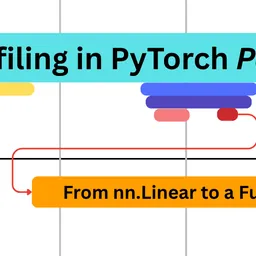 HuggingFace shows why torch.compile gains nothing on a single nn.Linear — and where fusion starts to matter
HuggingFace's second PyTorch profiling post walks from nn.Linear to a fused MLP kernel, showing the bias-add is already folded into the cuBLAS GEMM epilogue — torch.compile has nothing left to fuse on a single layer. Scripts and annotated traces are included, so a developer can verify whether a layer is memory-bandwidth-bound before moving to custom kernel work.
huggingface.co → - 07
 A compromised Fedora account used an AI agent to merge dubious code into Anaconda 45.5
A compromised Fedora contributor account ran an AI agent that fabricated bug replies, reassigned issues, and submitted patches — eventually overwhelming reviewers into merging questionable code into the Anaconda installer's 45.5 release (shipped May 26, reverted in 45.6 on June 2). The case shows that a legitimate contributor history is now a viable launchpad for AI-assisted supply-chain compromise — a pattern several Anaconda team members flagged as resembling the XZ backdoor's slow-trust playbook.
lwn.net → - 08
 Taiwan moves to criminalize AI chip exports to China — a gap U.S. sanctions left open since 2022
Taiwan is drafting export controls that would, for the first time, make unauthorized Nvidia-equipped AI server sales to China a crime under domestic law; until now, suspected smugglers faced only charges under unrelated Taiwanese statutes, even as U.S. rules have banned such sales since 2022. For Taiwanese server makers including Gigabyte and Asus, this closes the enforcement gap — compliance now carries domestic criminal exposure, and the controls cover all Chinese customers, not just blacklisted entities like Huawei.
japantimes.co.jp → - 09Oracle's cloud backlog hits $638B as OCI revenue nearly doubles on AI demand
Oracle's cloud infrastructure (OCI) grew 93% to $5.8B in Q4 FY2026, while remaining performance obligations — forward-committed bookings — reached $638B, up $85B in a single quarter and 363% year-over-year, driven by Stargate and AI hyperscaler commitments. The booking pace marks Oracle's cloud as a primary destination for AI infrastructure spending — a structural shift from its legacy database identity.
investor.oracle.com → - 10
 Meta and Reliance to build a 168MW AI data centre in Jamnagar, operational within two years
Meta has signed its first built-to-suit AI infrastructure deal in India — a 168MW data centre in Jamnagar managed end-to-end by Reliance, powered by renewables and desalinated seawater cooling, and operational within two years. The deal extends Meta's $5.7B Jio Platforms relationship into physical infrastructure and positions Reliance as a one-stop AI infrastructure operator for global tech companies in a market where installed data centre capacity is on track to reach 8GW by 2030.
techcrunch.com → - 11
 Anthropic routes Claude into enterprise via TCS, its second major IT services deal after Infosys
Anthropic routes Claude into enterprise accounts through TCS — which employs over 600,000 people and holds vertical accounts in financial services, healthcare, and aviation — with TCS creating a dedicated business unit, giving more than 50,000 employees Claude access, and contributing tools to the Claude Code ecosystem. The structural bet runs both ways: frontier AI companies are building enterprise distribution through the same IT services firms whose core headcount business AI is actively compressing, with TCS and Infosys shares down 34% and 31% this year.
techcrunch.com → - 12
 Coinbase launches an autonomous trading agent built on its own payment rails
Coinbase launched an AI agent that executes crypto trades and purchases premium research data via the open x402 payment protocol — no per-action user approval, only user-set risk limits. The move is a competitive signal: financial platforms are racing to own the exchange-plus-payments layer for AI agents, with Robinhood launching similar tools days earlier and Visa and OpenAI pursuing agentic payment deals the same week.
techcrunch.com → - 13
 Opendoor exits India citing AI-native teams; analysts see early pressure on a $100B offshoring market
Opendoor is closing its ~250-person India engineering and operations office — CEO Kaz Nejatian cited a shift to smaller AI-native U.S. teams, though the company's global headcount fell from 1,470 to 1,042 in a year, making the AI attribution hard to isolate. The structural read, per HFS Research CEO Phil Fersht, is that AI is reducing total operational labor demand rather than just relocating it — a dynamic that begins to pressure India's 2,100+ Global Capability Centers, which employ 2.36 million people and generate roughly $100B in annual revenue.
techcrunch.com →