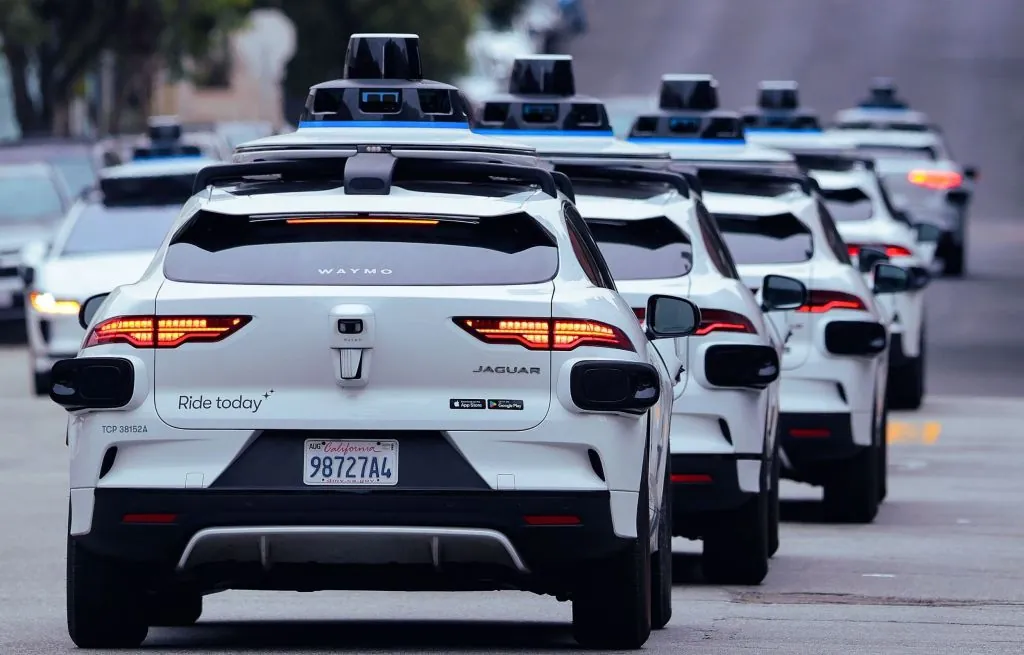
Waymo's robotaxis blocked San Francisco intersections for hours after July 4 fireworks
Waymo's fleet has quintupled to nearly 4,000 cars across 15 metro areas, and after San Francisco's July 4 fireworks show its robotaxis choked intersections and stranded some riders for more than three hours, with at least two driving over exploding fireworks and one catching fire. Waymo cites 94% fewer serious-injury crashes than human drivers and calls these 'edge cases,' but a federal regulator wrote in July that emergency scenes are neither rare nor extreme — the binding constraint on scaling autonomy is crowd and emergency behavior, not per-mile crash rates.
Source: entrepreneur.com ↗
Emergency scenes are not rare or extreme 'edge cases,'
Federal regulator, July letter
Why this matters
- → Autonomous vehicles fail predictably in high-stress, crowded scenarios — the opposite of 'rare edge cases'.
- → Scaling robotaxis requires solving crowd behavior, not just per-mile safety metrics.
- → Real-world incidents (fire, gridlock, stranded riders) expose gaps between lab performance and deployment read
When robotaxis meet crowds